
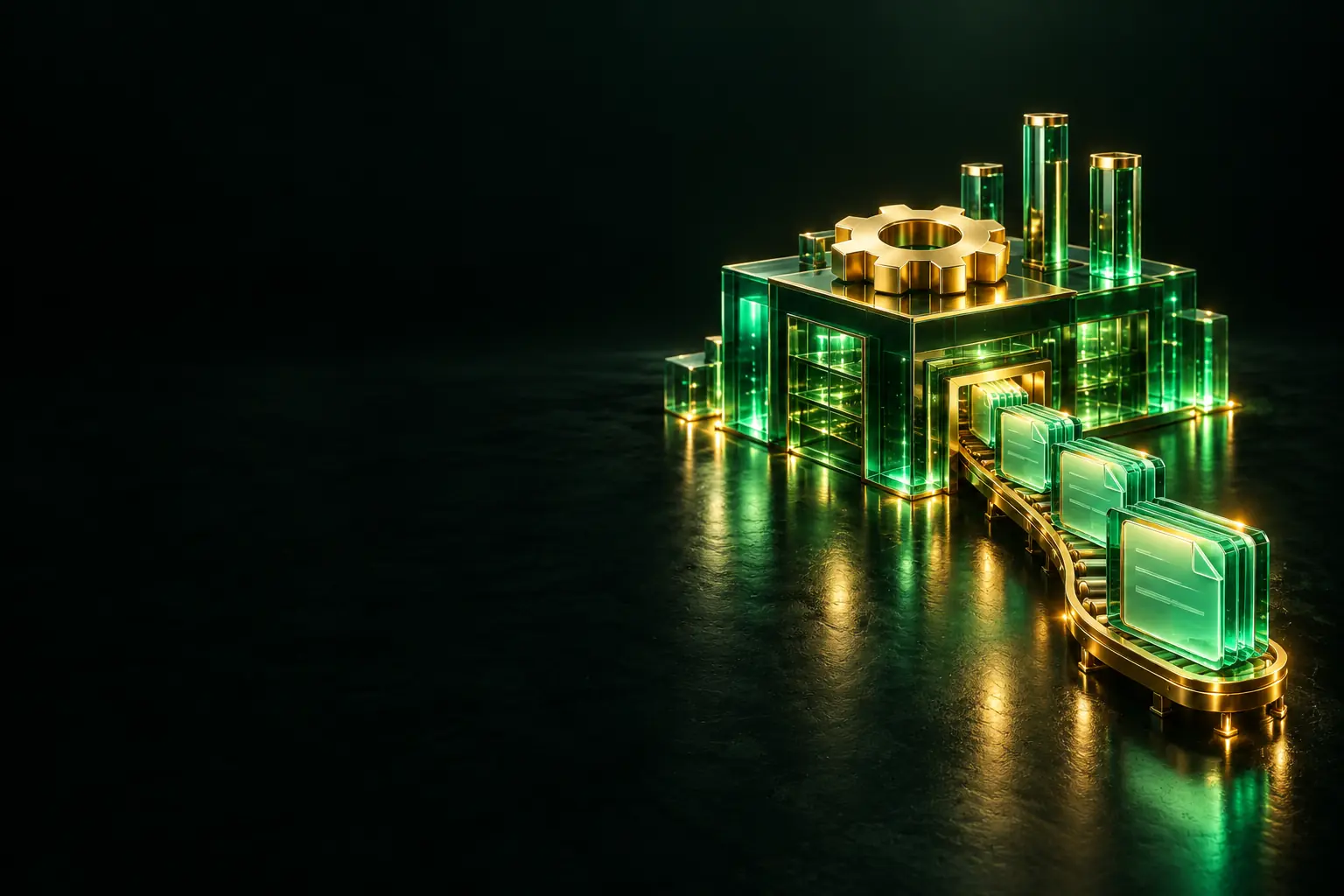
Manufacturing workflow software
Manufacturing workflow software handles the office work around production: order tracking, job status, materials, approvals and management reports in one place. We build it around your ERP and spreadsheets, so planners, supervisors and managers see the same picture without retyping data.
For production teams that track work by hand
The machines run well, but the information around them moves through spreadsheets, phone calls and paper. As a result, managers hear about a problem when the deadline has already slipped.
Small and mid-sized manufacturers
Orders come from sales, but planning, production and the warehouse each keep their own lists.
Workshops working to order
Each order is different, and its status lives in the heads of a few experienced people.
Companies with an ERP that doesn’t fit
The ERP holds orders and stock, but day-to-day job tracking happens in spreadsheets around it.
Managers who need a clear picture
Weekly reports take a day to put together and are out of date by the time they’re read.
What a first project can look like
Order information in one place
We decide which system holds the master order and give each team the planning data it needs.
Visible progress
Simple status updates for jobs, people and materials, with problems flagged as soon as they appear.
Less report rework
One status view built from day-to-day inputs instead of several spreadsheets rebuilt by hand.
Production order tracking and job tracking software: what it covers
The order card
One record per order with specification, deadline, drawings and changes, instead of versions in emails.
Job status from the floor
Supervisors update stages from a tablet or phone, or by scanning a QR code on the job card.
Materials
What is reserved, what is missing and what has been ordered, so a job does not start without parts.
Changes and approvals
A change to an order goes to the right people for approval and reaches the floor before work continues.
An ERP module, a ready job tracker or custom software?
If your ERP has a production module that fits your process, configuring it is usually the cheapest option. Ready-made job tracking software works for standard workflows and small teams. Custom software makes sense when you work to order, each job is different and the floor needs simple screens that standard tools do not offer.
In many cases the answer is a mix: the ERP stays the master for orders and stock, and a light custom tool covers day-to-day tracking around it. We compare these options during the walk-through.
From one order to the whole floor, step by step
Walk-through
We follow one order from sales to dispatch with the people involved and note where information is retyped or lost.
First process
We pick one product line or team and build status tracking and the link to your ERP or spreadsheets.
Trial on the floor
Supervisors and staff use it on real orders, and we adjust screens and fields to how they work.
Wider rollout
Once the first area works, we add other teams, materials tracking or management reports.
What you get
- A map of one order’s path, with the places where information is retyped or lost.
- A working status-tracking tool for the first team, connected to your ERP or spreadsheets.
- A management view of jobs, materials and delays, updated from day-to-day inputs.
- Instructions for supervisors and a plan for adding the next teams.
Start with one working process
We begin with one product flow or team. We agree the status fields, who updates them and the connection to your ERP or spreadsheets, then extend step by step.
We build office software around production. Machine control, PLC programming and hardware are outside what we do; we can work alongside the engineers who handle them.
What affects the cost of manufacturing workflow software
We quote cost and timing in EUR after the walk-through. The main factors:
Teams and stages
One product line with five stages is a smaller start than the whole plant.
Connections
Reading orders from the ERP is simpler than two-way sync of orders, stock and statuses.
Floor conditions
Tablets, scanners, poor Wi-Fi or offline work add design and testing.
Reports
A status overview or detailed reports on delays, capacity and on-time delivery.
We’ll quote cost and timing in EUR after a short brief.Discuss your production workflow
Why shop-floor systems get abandoned
- Screens designed in the office, with too many fields for someone at a machine.
- Double entry: staff update both the new tool and the ERP.
- Rolling out to the whole plant at once instead of one team.
- Nobody responsible for keeping statuses up to date.
Manufacturing workflow software: common questions
Can it work with poor Wi-Fi on the floor?
We check the network during the walk-through. If coverage is patchy, we design screens that save updates and send them when the connection returns, or place shared terminals where the signal is reliable.
Do we have to replace our ERP?
No. In most cases we build around it: the ERP stays the master for orders and stock, and our tool covers the day-to-day tracking it doesn’t handle well.
Can staff on the shop floor use it?
Yes, if the screens are simple. We design for tablets or phones and test with the people who will use them, not only with managers.
Can it work with machine data?
We work with office and operational records. If your equipment already exports data, we can show it in reports; connecting to machines directly is a separate engineering job.
What if our process changes often?
We start with the stable part of the process and keep settings such as statuses and fields easy to change without a developer.
Where is the system hosted?
Where your company prefers: with a cloud provider you approve or on your own servers. We agree this, along with backups and access rights, before development starts.
Read before you start
Short practical guides on the same subject.
What should work better in your business?
Describe the bottleneck, your tools and the result you want. We’ll reply with questions and a suggested first step.
The first conversation is free, with no obligation.